FanlessTech

7.31.2026

Akasa Kepler R - for redundant PSU


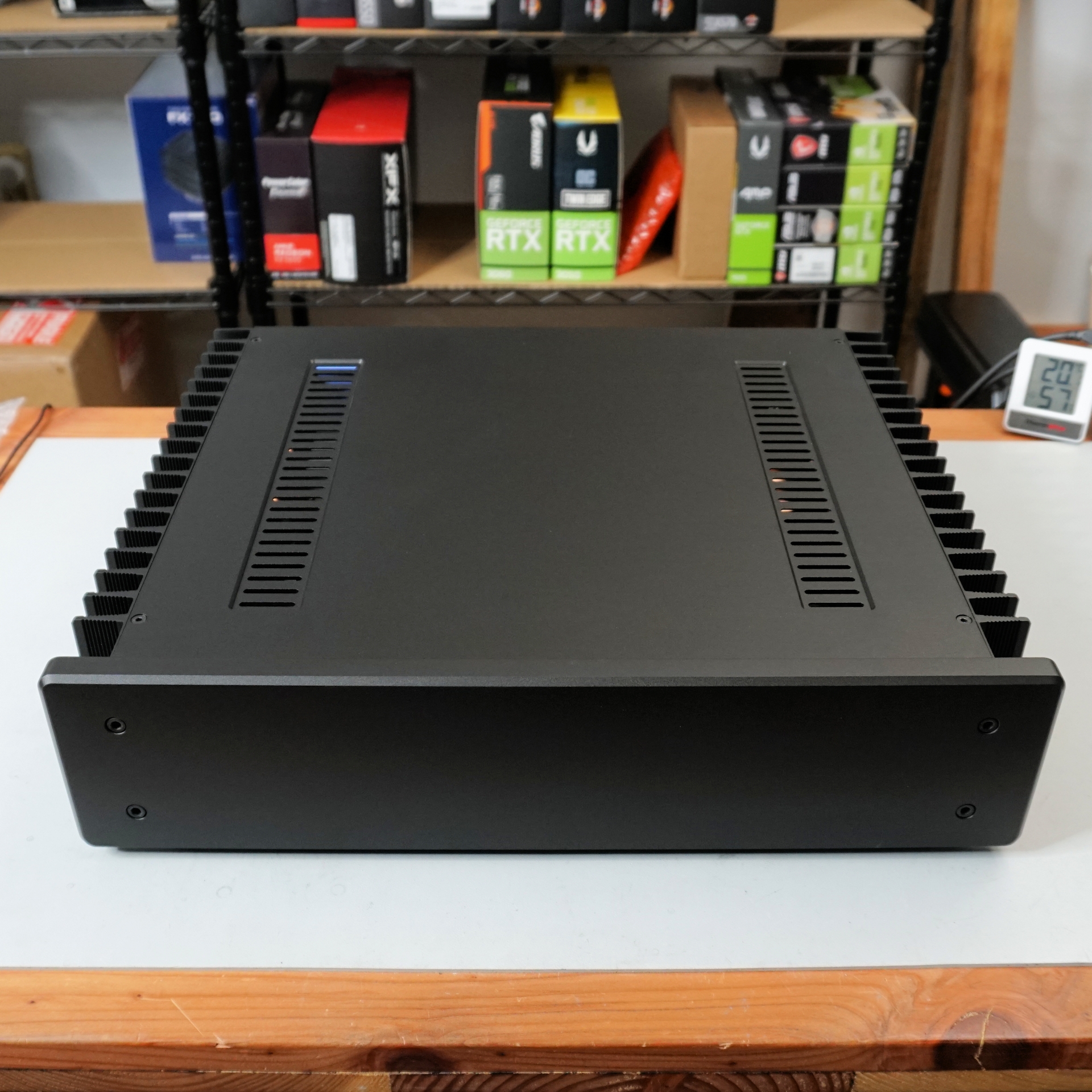
Akasa, a leading provider of thermal solutions, has expanded its Kepler fanless case series with the Kepler R, a 2U rack-mountable fanless case for Micro-ATX and Mini-ITX motherboards. Building on the Kepler design, the Kepler R introduces a 120W redundant, hot-swappable ATX power supply unit (PSU), allowing system integrators to keep their systems running even if one PSU module fails. This makes it ideal for critical applications, including enterprise servers, embedded computing, industrial control systems, audiovisual equipment, and medical devices that require silent operation, 24/7 reliability and zero downtime.


The chassis is compatible with Micro-ATX and Mini-ITX motherboards with Intel® LGA1851 and LGA1700 sockets, supporting Intel® Core™ (12th / 13th / 14th Gen) and Core™ Ultra (15th Gen) processors up to 35W TDP.


Built with a fully fanless design, it uses a high-performance aluminium thermal module and dual copper heatpipes to transfer heat efficiently from the CPU to the external aluminium fins, increasing surface area for rapid dissipation into the surrounding air without any moving parts.


The front interfaces include two USB 3.2 Gen 1 Type-A ports and four 2.5” SATA SSD/HDD drive bays with tool-free, lockable, hot-swap trays. The rear features support for up to four low-profile PCIe expansion cards. Two pull-out handlebars offer easy installation and servicing when used in standard 19” server racks.


The Kepler R integrates a 120W redundant AC-to-DC power supply, delivered across two hot-swappable 1U fanless modules with active load sharing. When one module fails, load transfers automatically to the second unit, keeping the system operational while the faulty module is replaced.


The PSU accepts 90–264 VAC and 190–310 VDC input, covering mains power systems worldwide and high-voltage DC bus deployments, and outputs the full ATX rail set: +3.3V, +5V, +5V standby, +12V, -12V. It is 80 PLUS Silver certified, achieving up to 89% efficiency at typical load, and rated for operation from -5°C to 50°C. Built-in over-voltage, over-current, over-temperature and short circuit protection safeguards the PSU and connected components. It has a mean time between failures (MTBF) rating of 100,000 hours, equivalent to approximately 11.4 years of continuous operation, and carries UL/cUL, TUV, CB, CE, CCC and FCC certifications.

Source: Akasa 

7.29.2026

N150 Chromebox listed for $729.99


The Acer Chromebox CXM2 is now listed for a whopping $729.99. While commercial-grade PCs certainly deliver top-tier reliability and support, dropping $700+ for a paltry 8GB of RAM and 64GB of eMMC storage is a tough pill to swallow. Connectivity is excellent, though, and includes five USB 3.2 Gen 2 ports, a USB 3.2 Gen 2 Type-C port, and two HDMI 2.1 ports, allowing it to support up to three independent monitors. The web-centric machine also features Wi-Fi 6E, Bluetooth 5.3, and a Gigabit Ethernet port. 

7.28.2026

Wildcat Lake chips mark the end of ultra-small fanless PCs


When processors jump from 6W (like Intel’s Alder Lake-N and Twin Lake) up to a baseline 15W TDP (with short power bursts stretching to 25W or even 35W), the physics of passive cooling change completely. While 15W doesn't sound like much power, cooling it without a fan in a tiny enclosure is a major thermal engineering hurdle. At 15W sustained, natural convection simply isn't fast enough in a tight space. In fact, 15W TDP brings us back to the original NUC, 14 years ago: The first fanless NUC cases were chunky boys.


Update: The Atom isn't going anywhere, new chips are coming from Intel partner RosaicLabs.

7.27.2026

Tom’s Hardware reviews Senza AI


"System tools showed that during light activities like browsing the web and typing reports like this one, the CPU temperature stayed around 30 degrees C. Playing The Division 2 for 30 or 40 minutes, the reported CPU temperature seemed to stay between 60 C and 70 C. It didn’t constantly creep upwards; it would sometimes go towards that upper bound, and sometimes fall again. However, running a workload like Cinebench R23 multicore the temperatures seemed to creep inexorably upwards, with the highest measurement I saw at 96 C. Between tasks, the reported CPU temperature would fall very rapidly. I saw it dive from 75 C to 45 C in under 10 seconds after one of the recent benchmarks I completed. That’s pretty impressive given that there’s no fan."

Source: Tom’s Hardware 

7.24.2026

iGPU: Intel is finally ahead


Intel's Core Ultra X7 358H powers the Kubb Fanless

7.23.2026

Long live the optical drive


Despite what Sony might think, optical drives aren't dead yet. Quiet PC launches two new fanless systems - Intel or AMD-powered - featuring the Streacom FC8 heatsink case. The front panel features a sleek, integrated slot-loading optical drive bay, which can be configured with a DVD or Blu-ray drive for media playback and archiving. The systems feature CPUs up to the Core Ultra 9 285T or Ryzen 7 9700X, up to 64GB of RAM and up to 20TB of SSD storage.

7.21.2026

Two faithful companions


We always loved this picture of a cat on a Streacom DB4. Well, we finally found her. Meet Chi (from the Konami Kanata manga) in 2019 (picture 1) and in 2026 (picture 2 and 3). The PC itself is still going strong and went from a Ryzen 7 1700 and Radeon RX 550 combo, to a Ryzen 7 5700X paired with a GeForce RTX 3050. Here’s to many more years for both!

7.20.2026

Budget fanless RTX 4060


This DIY masterpiece features a GeForce RTX 4060 strapped to a 2.5kg (5.5 lbs) heatsink that looks like a brutalist architectural model. The towering block of extruded aluminum fins completely dominates the tiny RTX 4060 PCB. The fins are wide apart, designed to let natural convection do the heavy lifting. It is completely impractical, beautifully excessive, and we love it. 

Source: bilibili